
The Independent Travel Guide to Zimbabwe
The independent travel guide to Zimbabwe
Known for all the wrong reasons – hyperinflation, an independence leader turned despot, and rampant corruption, Zimbabwe fell off the travel map many years ago. However, despite decades of economic decline and political upheaval, hope simmers in this southern African nation, and a warm welcome awaits everyone who visits.
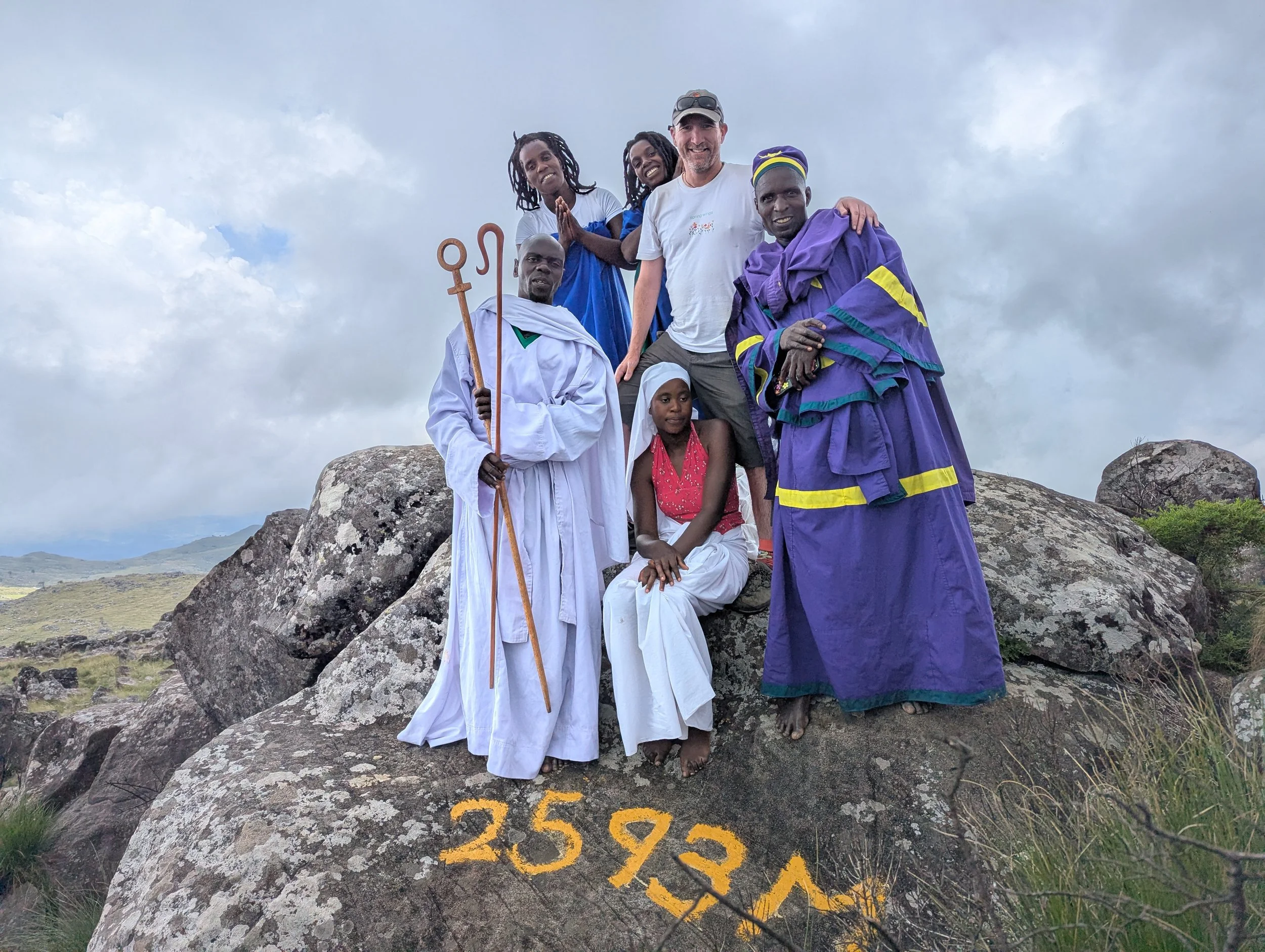
Standing atop Mt Nyangani with my new blessed friends.
The Highlights
As with most African countries, it is the people make a visit to Zimbabwe enjoyable and unforgettable. Despite ongoing adversity and racial differences (more on this later), Zimbabwe remains a welcome destination for travellers. Whether at a cricket match, a nightclub, walking in nature, or wandering in the markets, you are sure to meet friendly, curious, and welcoming people. Zimbabweans also love to dance, so be sure to have a few moves ready, because you never know when the opportunity will arise!
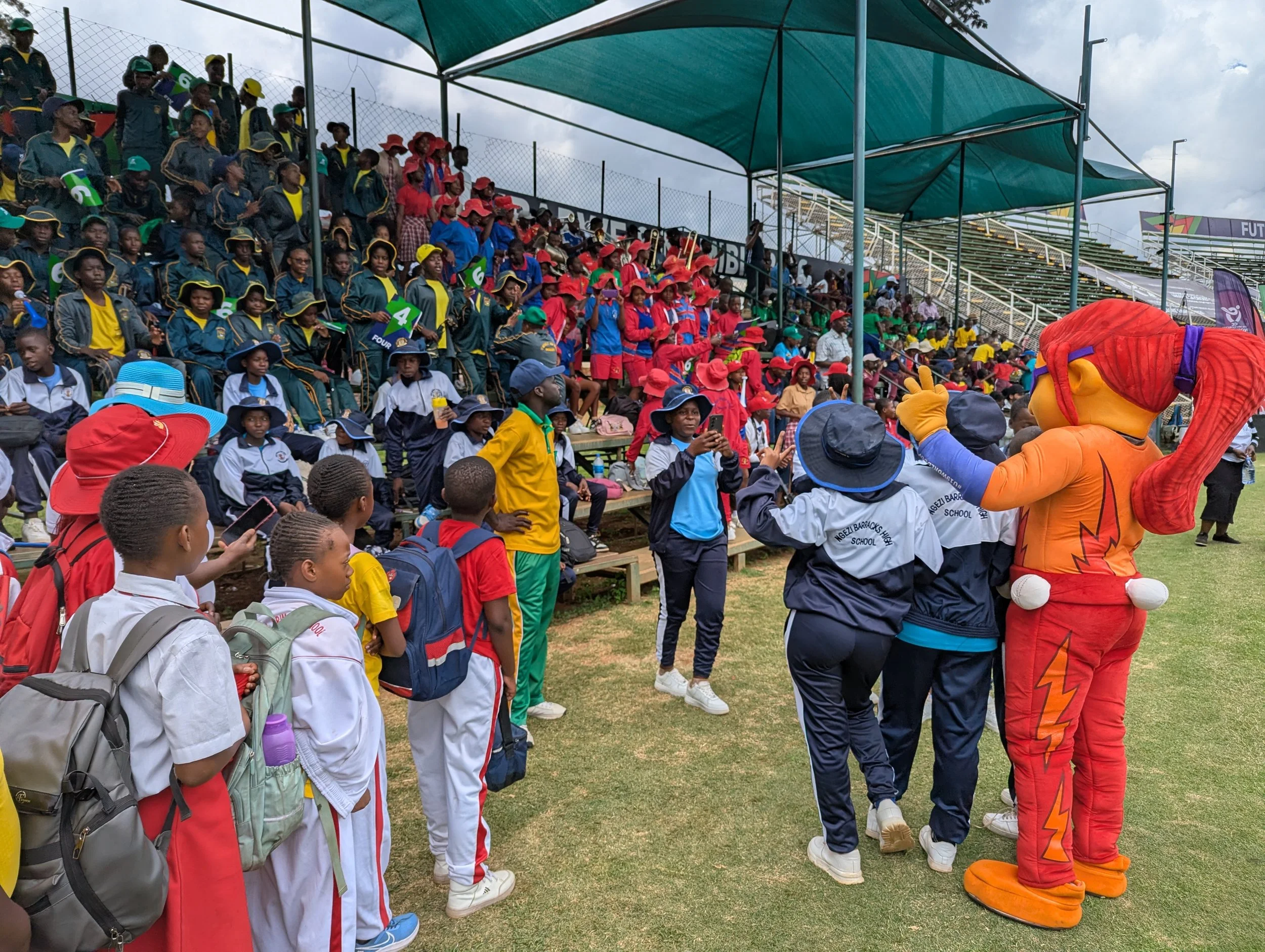
School students attending the U/19 World Cup final in Harare
The other attraction of Zimbabwe is the chance to view some of Africa’s most stunning natural scenery. National parks are found throughout the country and are home to woodlands, rivers, and an abundance of wildlife. A car is the best way to access these areas, with public transport limited and hitchhiking unreliable and time consuming. The mighty Mosi-oa-Tunya (Victoria Falls) is Zimbabwe’s most popular attraction, with Africa’s biggest waterfall thundering on the western border with Zambia.
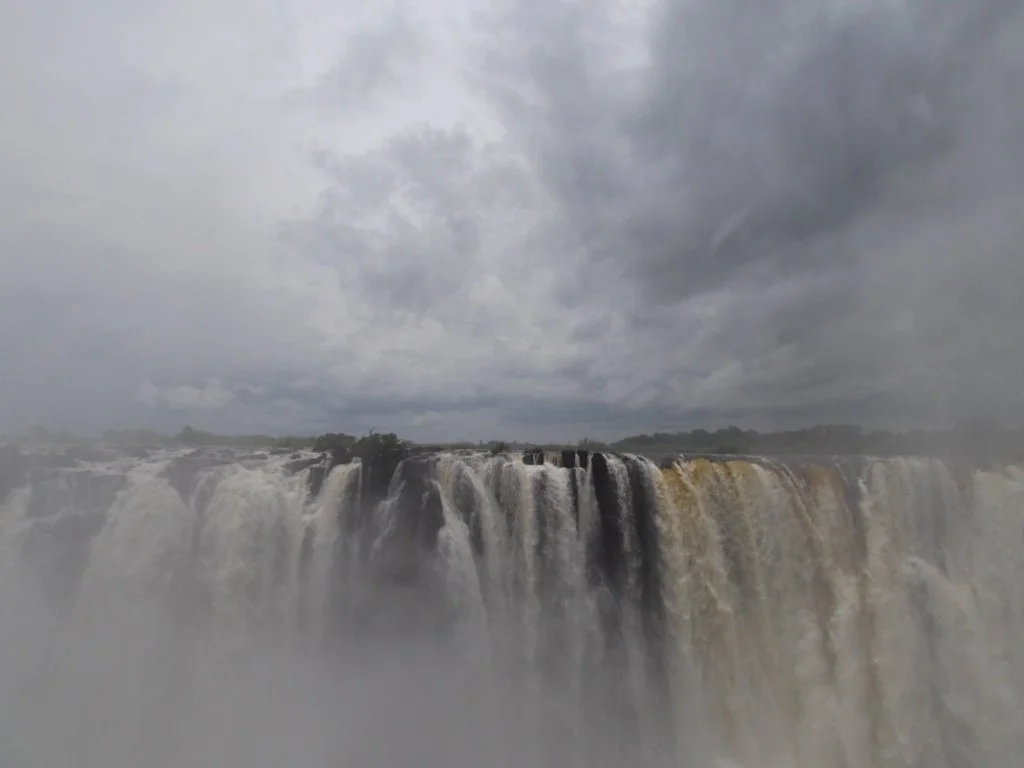
Mosi-oa-Tunya, the smoke that thunders
On the eastern boundary, Nyanga national park is home to Mt Nyangani, Zimbabwe’s highest peak, with views into neighbouring Mozambique. Meanwhile, the largest stone ruins in sub-Saharan Africa are found at Great Zimbabwe. The vast archaeological site offers a fascinating glimpse into the history of the Shona people and is a must see.
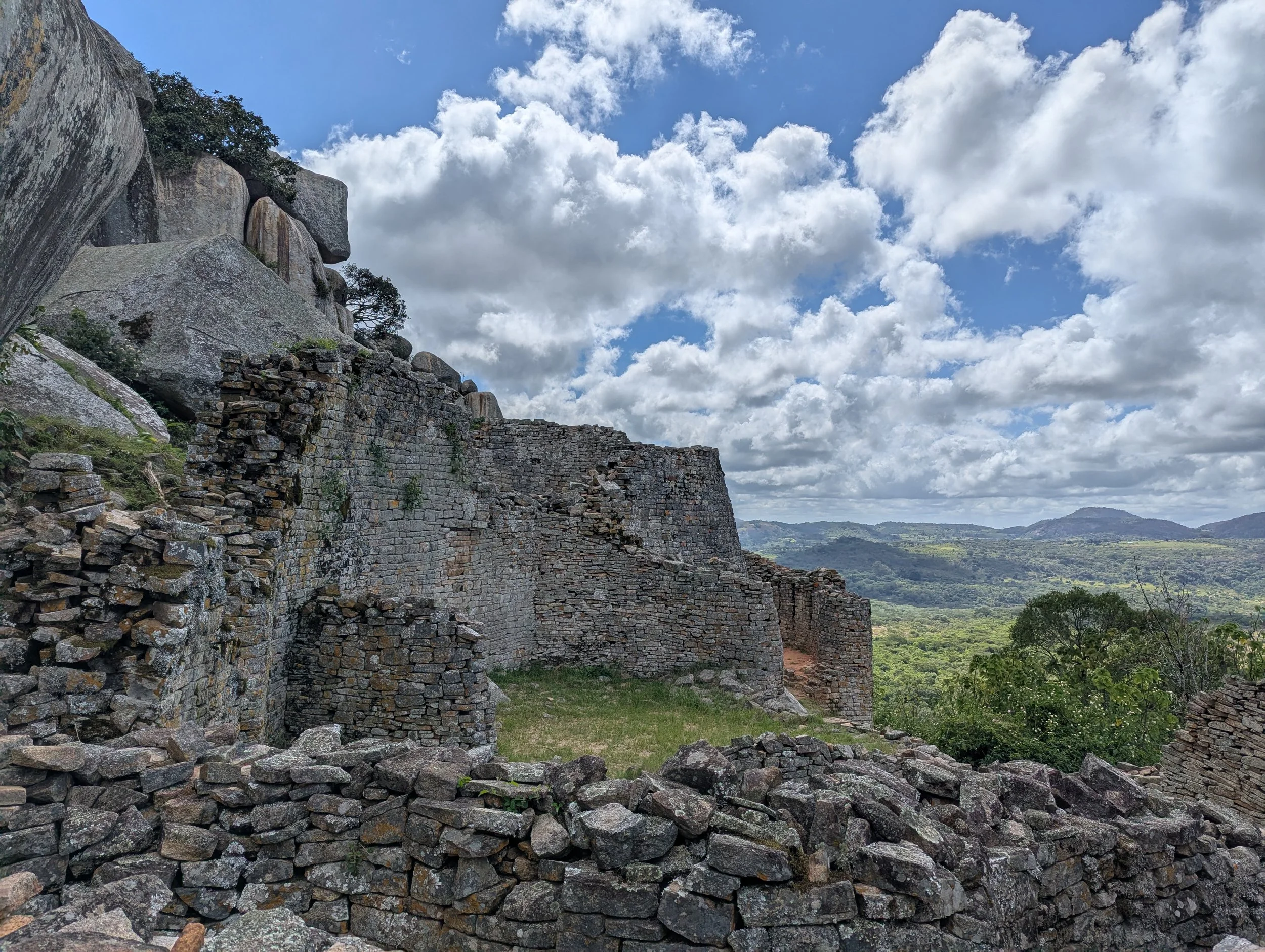
The ruins of Great Zimbabwe
Finally, Zimbabwean names are some of the most imaginative in Africa. The taxi driver who drove me to the Mozambiquan border was named Lovemore (he was father to several children, and how could you not be with such a name), while the names of others I met included Privilege, Godknows, and Godlove.
The Lowlights
Considering the decades of hardship that Zimbabwe has endured, there are few drawbacks for independent travellers. While some of the highways are potholed from years of neglect, they are no worse than many other African countries. All the drivers were conscientious, careful and patient when overtaking, and often bus rides began with a song and a prayer. The same cannot be said for drivers in Harare. Nowhere in Africa have I felt less safe crossing the road than in Harare. Drivers seem hostile towards pedestrians and the traffic is best described as homicidal.
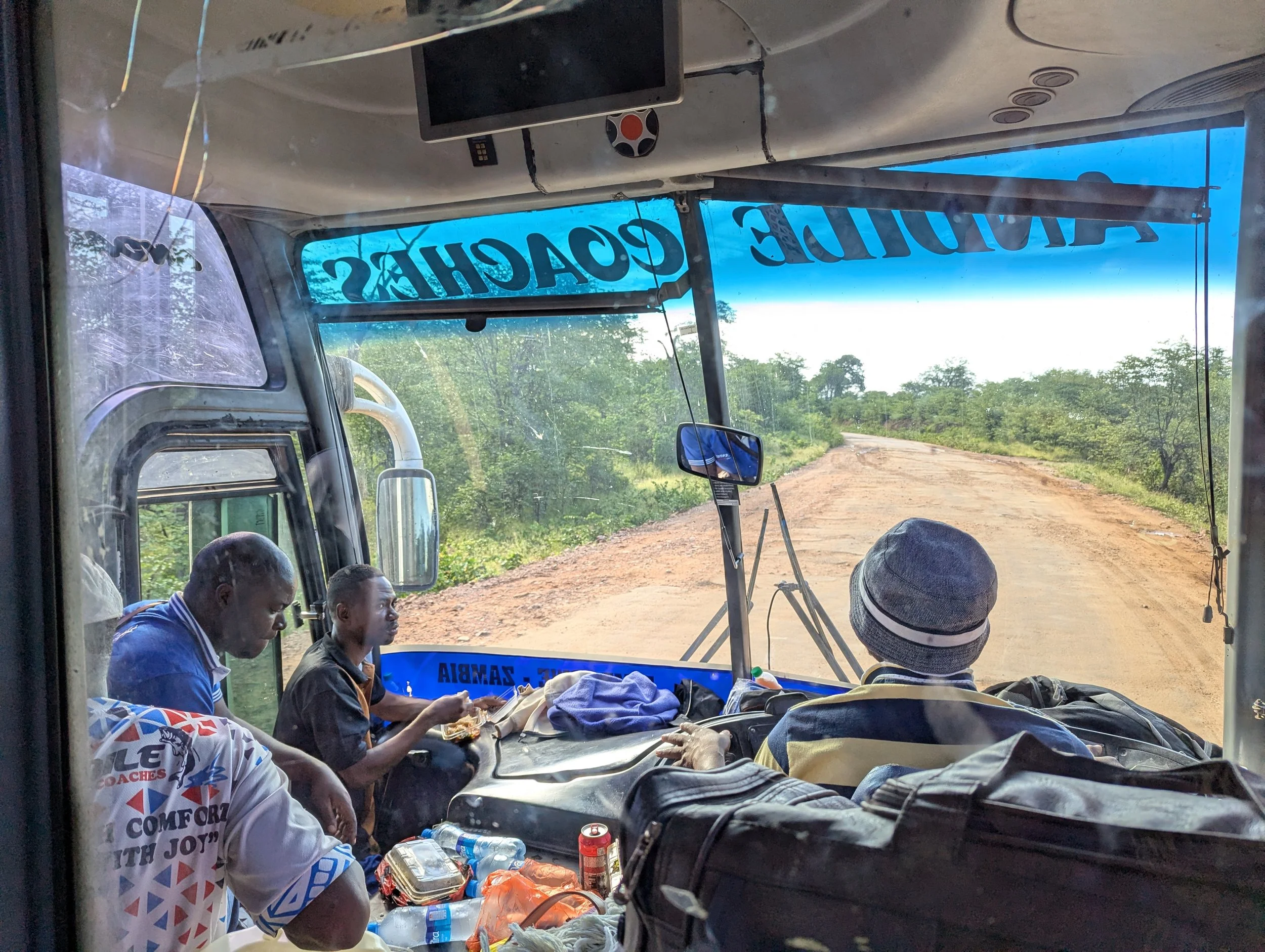
The northwest region after crossing in from Zambia
The racial divide in Zimbabwe is real and feels more severe than in South Africa. Unlike their southern neighbour, Zimbabwe never had a truth and reconciliation process, and Robert Mugabe was colour blind when it came to political persecution and corruption. Thus, the wounds of Rhodesia, and the subsequent rule of Mugabe, were left unattended, scarring the culture. The result is that most young white Zimbabweans are emigrating, and the older generation are left to reminisce, with their fading memories of white minority rule. Racist attitudes, while rarely overt, percolate under the surface and lace all political discussions.
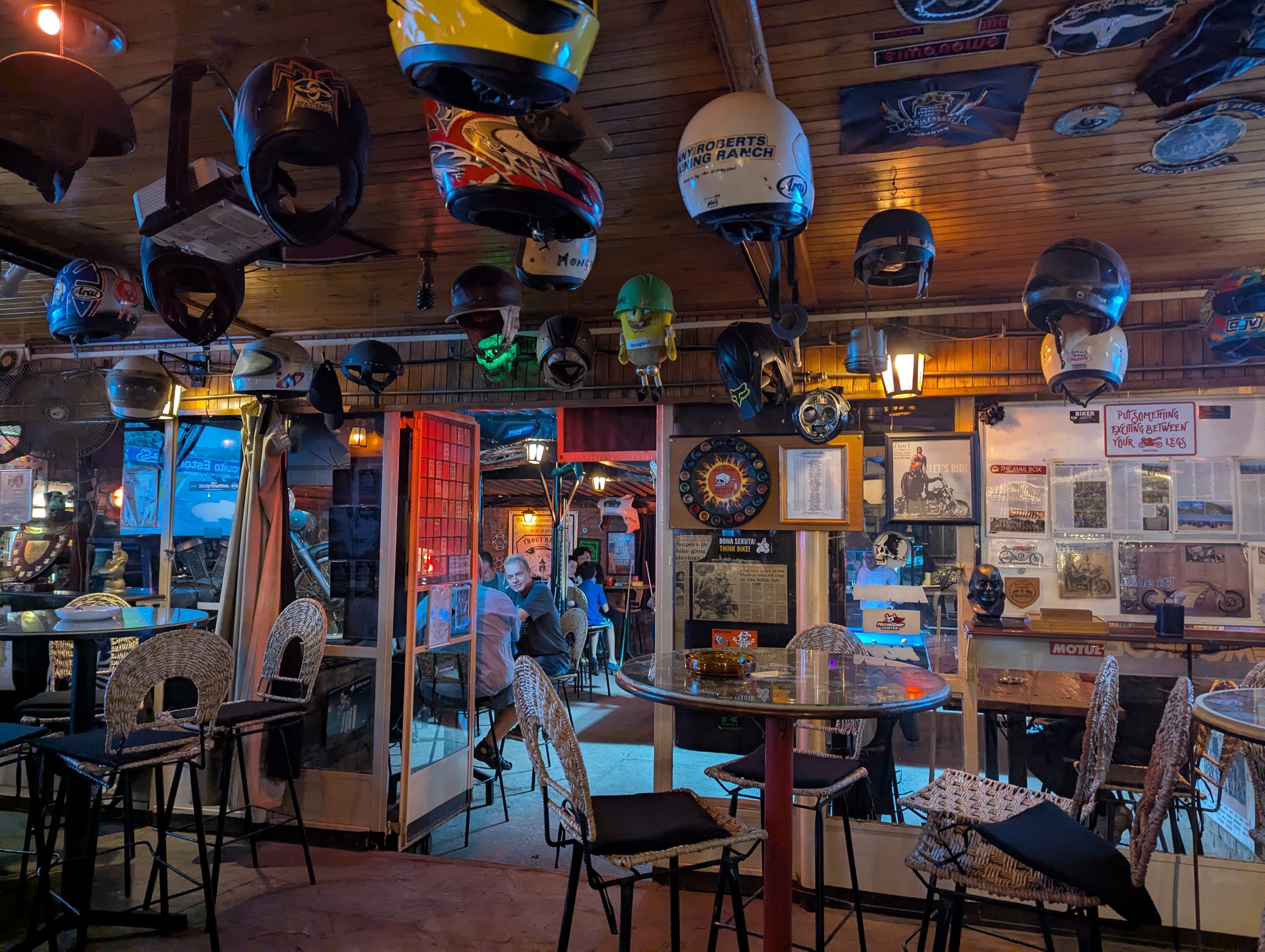
One of many bikers bars in Harare
How safe is Zimbabwe?
There are parts of Harare that the white population of Zimbabwe simply won’t go. These places are not inherently unsafe or dangerous, rather, they are spaces for ‘Africans.’ Mbare market, on the outskirts of Harare is one such place. Mbare is no different to the thousands of informal markets that are found throughout Africa, yet it is regarded as an ‘African’ space. There seems to be an unspoken agreement that certain places are designated White Harare (bikers clubs, weekend markets), and others are Black Harare (informal markets, nightclubs, most of the CBD). Mbare market is so infrequently visited by white Zimbabweans that it was just assumed I was from somewhere else.
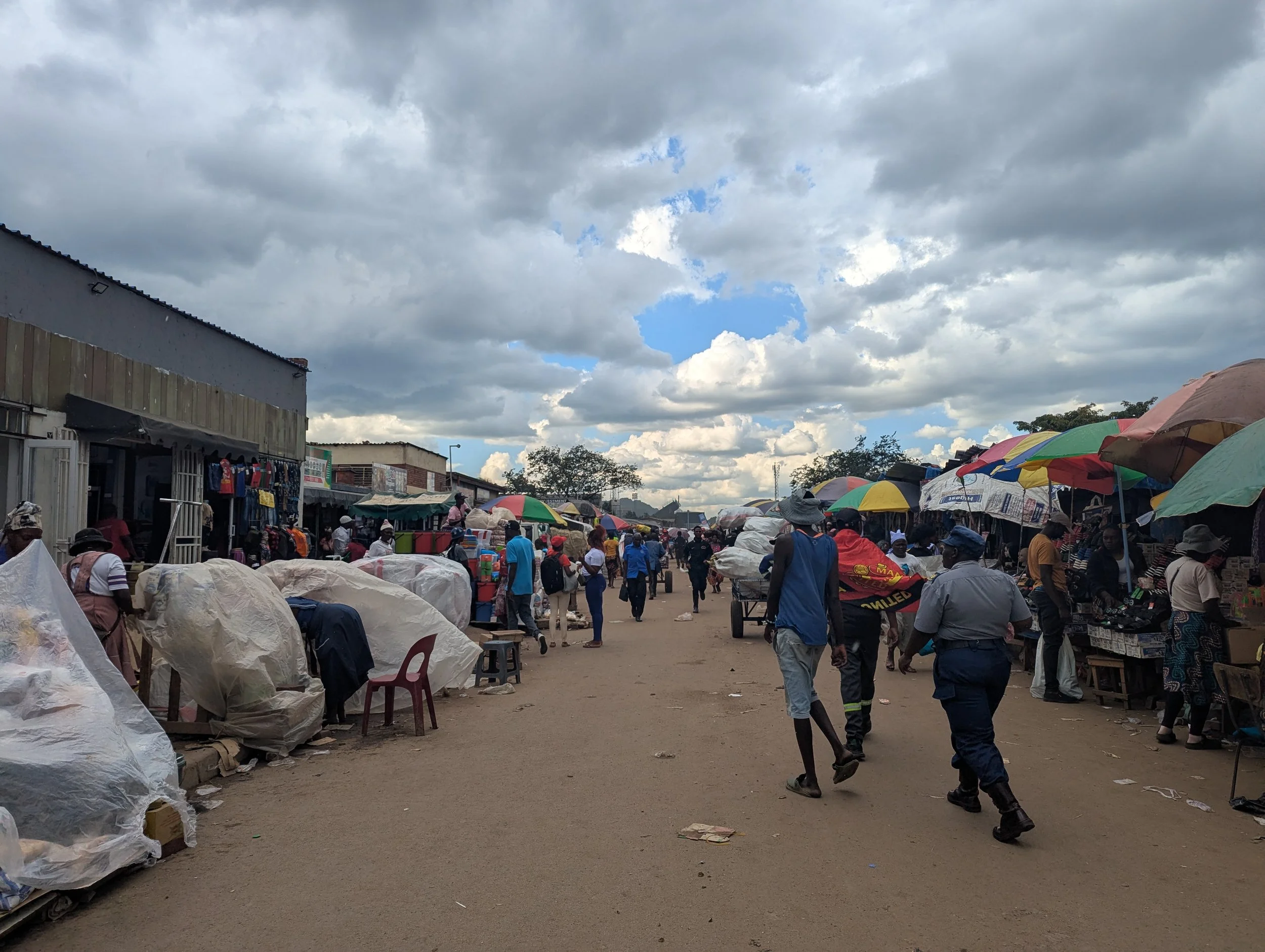
Mbare market in Harare
Top 5 Independent Travel Tips
Cash is king: Unlike many neighbouring countries who have embraced digital currency, cash still rules in Zimbabwe. There are two official currencies, the US dollar and the near worthless ZIG. Most transactions take place in USD, and travellers will rarely receive ZIG, though it is handy for public transport or buying small amounts of fruits and vegetables from the markets.
Small notes: All shops in Zimbabwe, supermarkets included, do not have a lot of change. It is best to break large notes at a bank and use small denominations are much as possible. Cashiers may even ask you to buy something extra to round up, to avoid giving away too much change.
Second is best: When riding in a minivan, it’s best to sit in the second row. Minivans in Zimbabwe are packed tighter than a tin of sardines. The conductor, usually a wiry teenage or twentysomething will squeeze himself into the space between the sliding door and the front row. Sitting in the second row ensures some level of comfort and personal space, small as it will be.
Hold your tongue: Discussions with white Zimbabweans will inevitably involve lamentations of the country’s decline since independence. While there are real and significant political and economic challenges facing all Zimbabweans, these discussions are often laced with racist undertones. Unless you have lived through it, written a thesis on post-independence Zimbabwe, or want to have an argument, listening is advised over speaking.
Hire a car: To make the most of any trip to Zimbabwe, and to really explore deep into the national parks and natural wonders, hiring a car is the best option. Public transport to major destinations exists, though can be difficult and time consuming. Car travel will inevitably involve encounters with police, with roadblocks not uncommon, so be practice your negotiating skills before arriving.
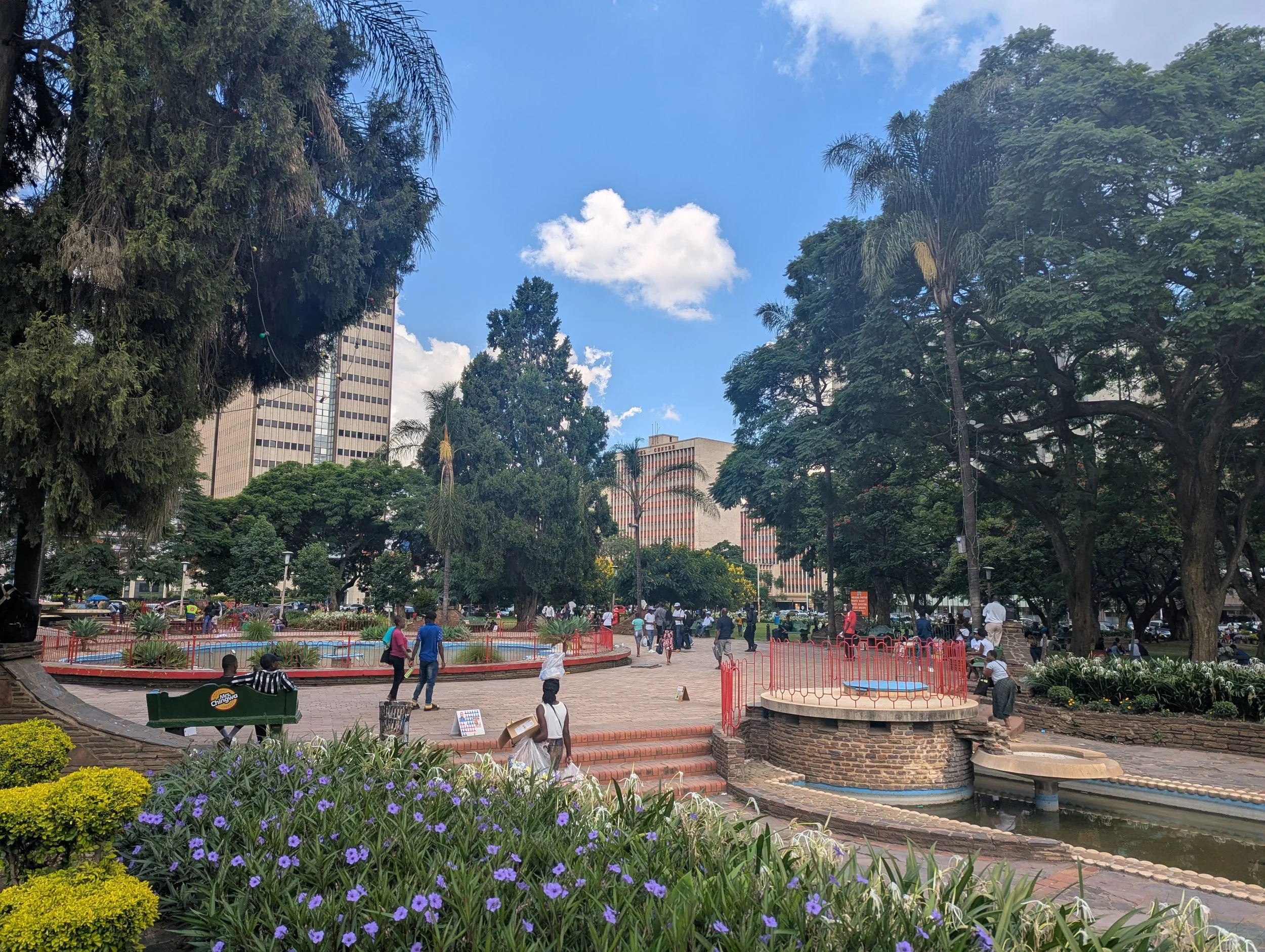
Harare CBD
If you enjoyed this article and would like to support travelonastustring, you can ‘buy me a coffee’ or donate directly via PayPal. Any donation, no matter how large or small, is appreciated and goes towards the running of my site.
To read more of my work visit the ‘publications’ tab, which includes a link to my book ‘Everything All of the Time,’ available on BookBaby or Amazon.