
The Independent Travel Guide to Uzbekistan
The Central Asian nation of Uzbekistan is rocketing up the list of the world’s hottest travel destinations. With growing interest in Silk Road tourism, Uzbekistan has positioned itself perfectly. Increased flight connections from Asia and Europe, and government reforms in the sector saw a tourism boom in 2025. A record breaking 1.4 million people visited Uzbekistan up to the end of September and the numbers are expected to grow into 2026.
For independent travellers Uzbekistan is an ideal destination. The country's highlights are easily accessible without the expense of an organised tour, and tourism infrastructure is improving year by year. In October 2025, Tashkent was added to the roster of Air Asia X destinations, with direct (and cheap) flights from Malaysia, while Copenhagen also launched direct flights to the capital. In 2026 connections from Europe and Asia are expected to grow.
The Highlights
If you’re planning a trip to Uzbekistan then Samarkand will likely be at the top of your list. The centre of this Silk Road City is dominated by the spectacular Registan Square, a vast plaza flanked by three towering madrasahs. It is the crown jewel in Uzbekistan’s travel advertising, and for good reason.
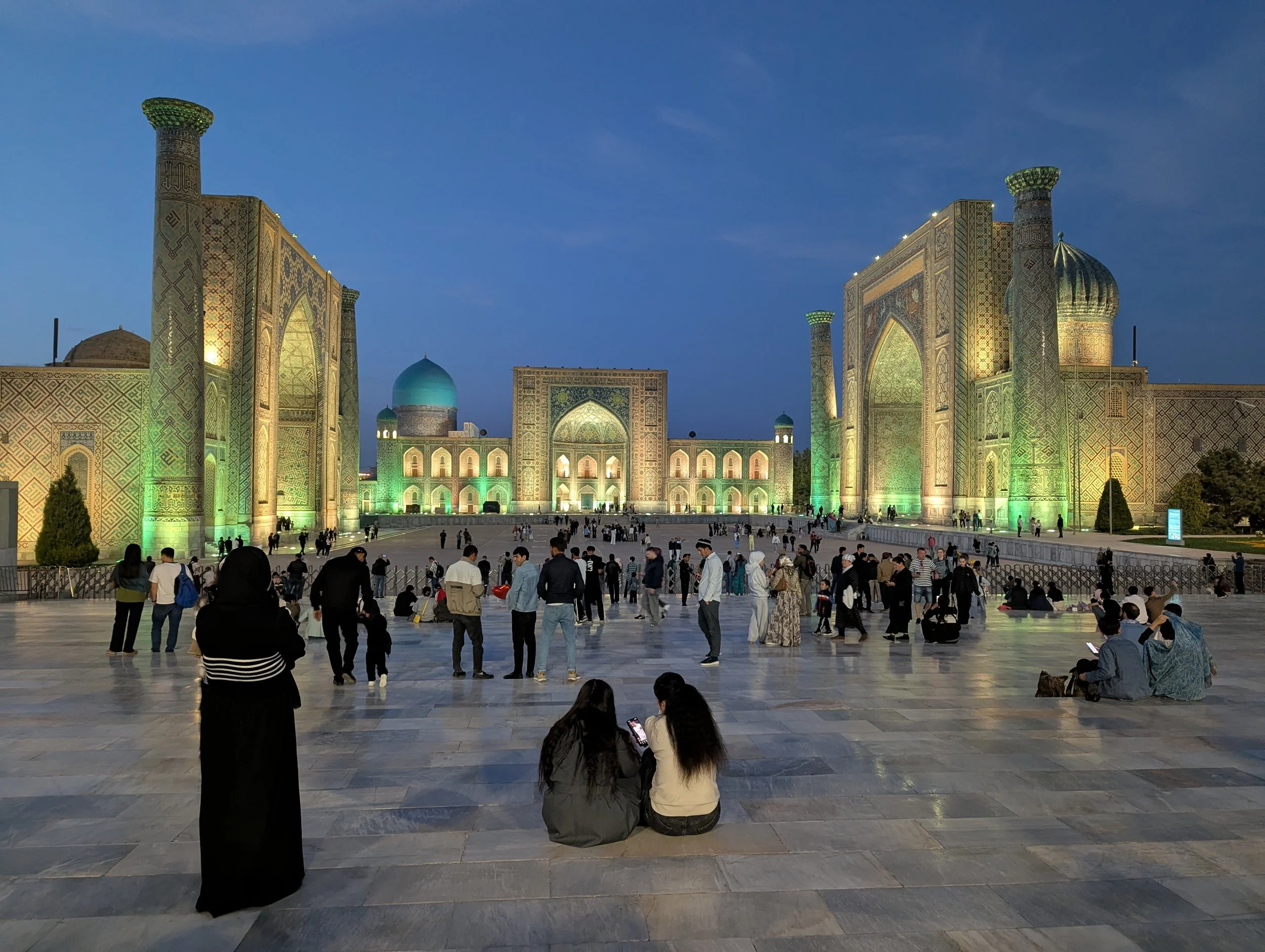
Registan Square at dusk
Further along the tourist trail is Bukhara, with its blue domed mosques and minarets, and impressive array of Soviet paraphernalia. Lastly, the ancient city of Khiva, founded over 2,500 years ago. The old town of Itchan Kala transports visitors back centuries, and was my personal favourite. All three destinations are easily accessible by train and bus and can be enjoyed within the space of a week.
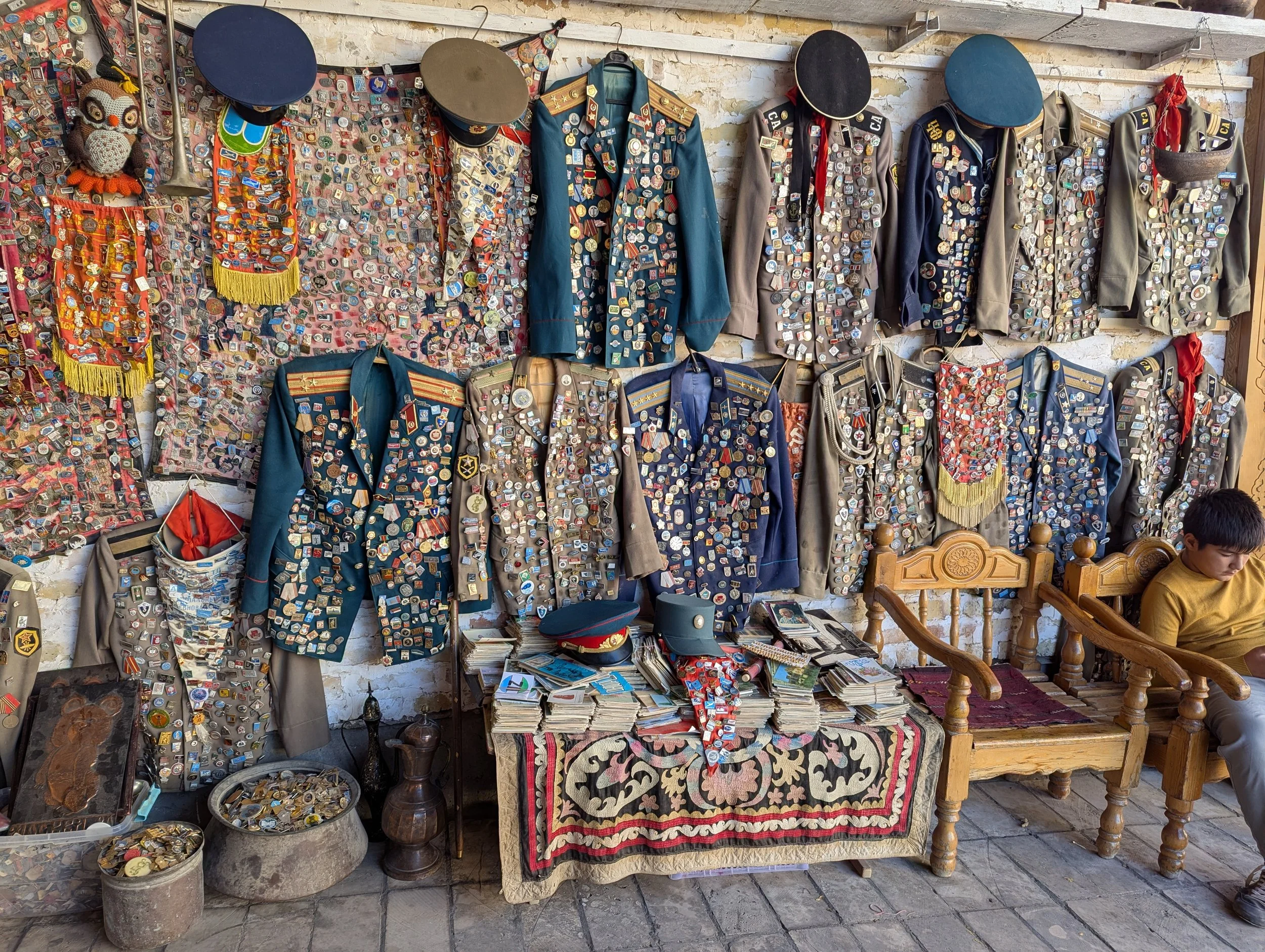
Soviet memorabilia for sale in Bukhara
Uzbekistan’s capital, Tashkent, should not be overlooked. An earthquake in 1966 flattened most of the city, however, there are still many fine examples of Soviet architecture, mosques, museums, markets, and gardens in which to sit and read a book.
The Tashkent metro is famous for its many themed stations, including Kosmonavtlar (Cosmonauts), Alisher Navoi (a renowned Central Asian poet), and Paxtakor (mosaic designs honouring the cotton industry) and it's well worth prolonging a journey to visit these stations.
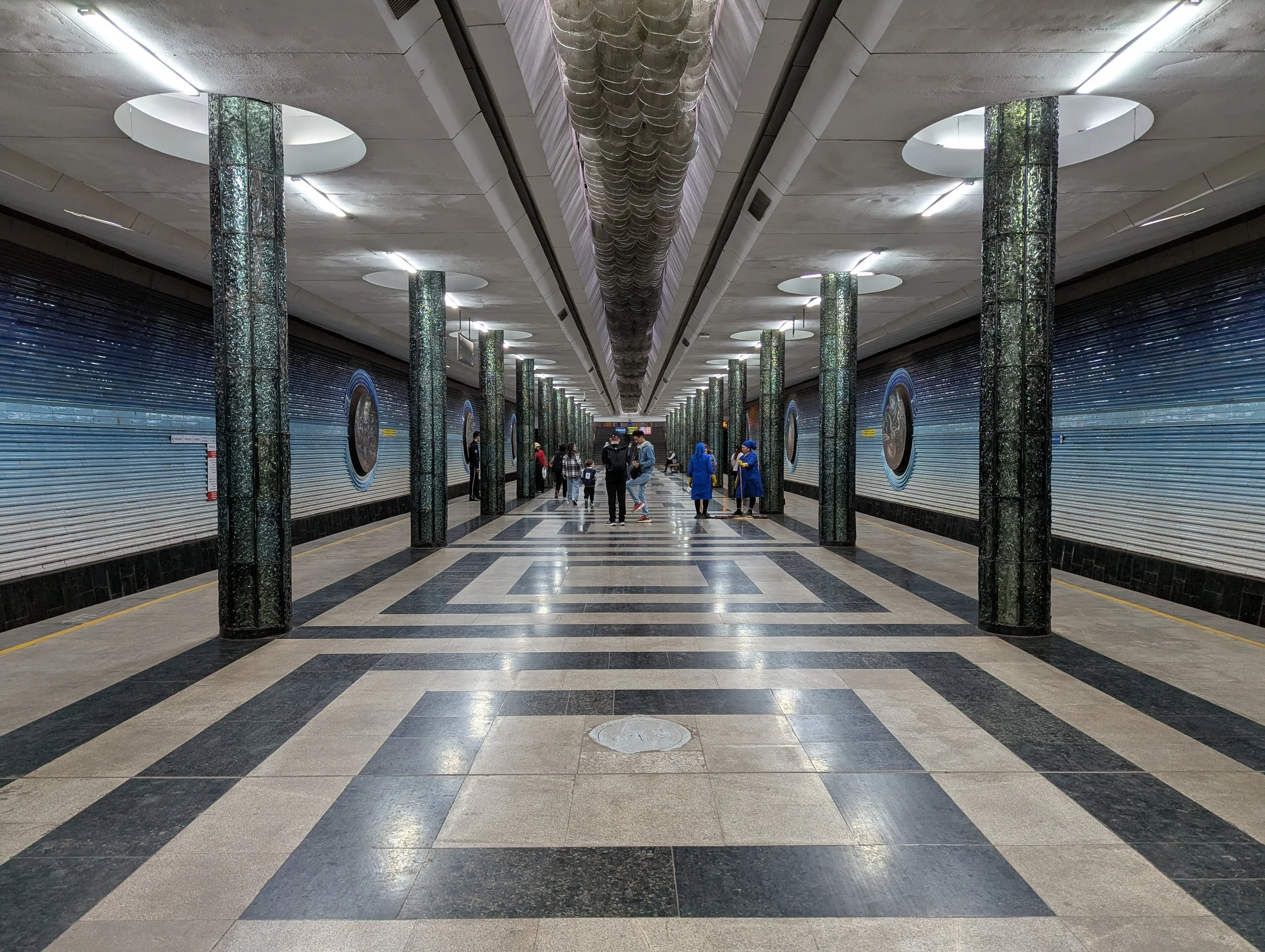
Kosmonavtlar station in Tashkent
Finally, a word on Uzbek cuisine. Plov (meat and rice seasoned with spices) is the most famous dish throughout the country, while barbequed meat (shawarma) is also popular. Bread is ubiquitous and accompanies almost every meal. Pomegranates, Uzbekistan’s national fruit, are plentiful, and make for a delicious and healthy snack.
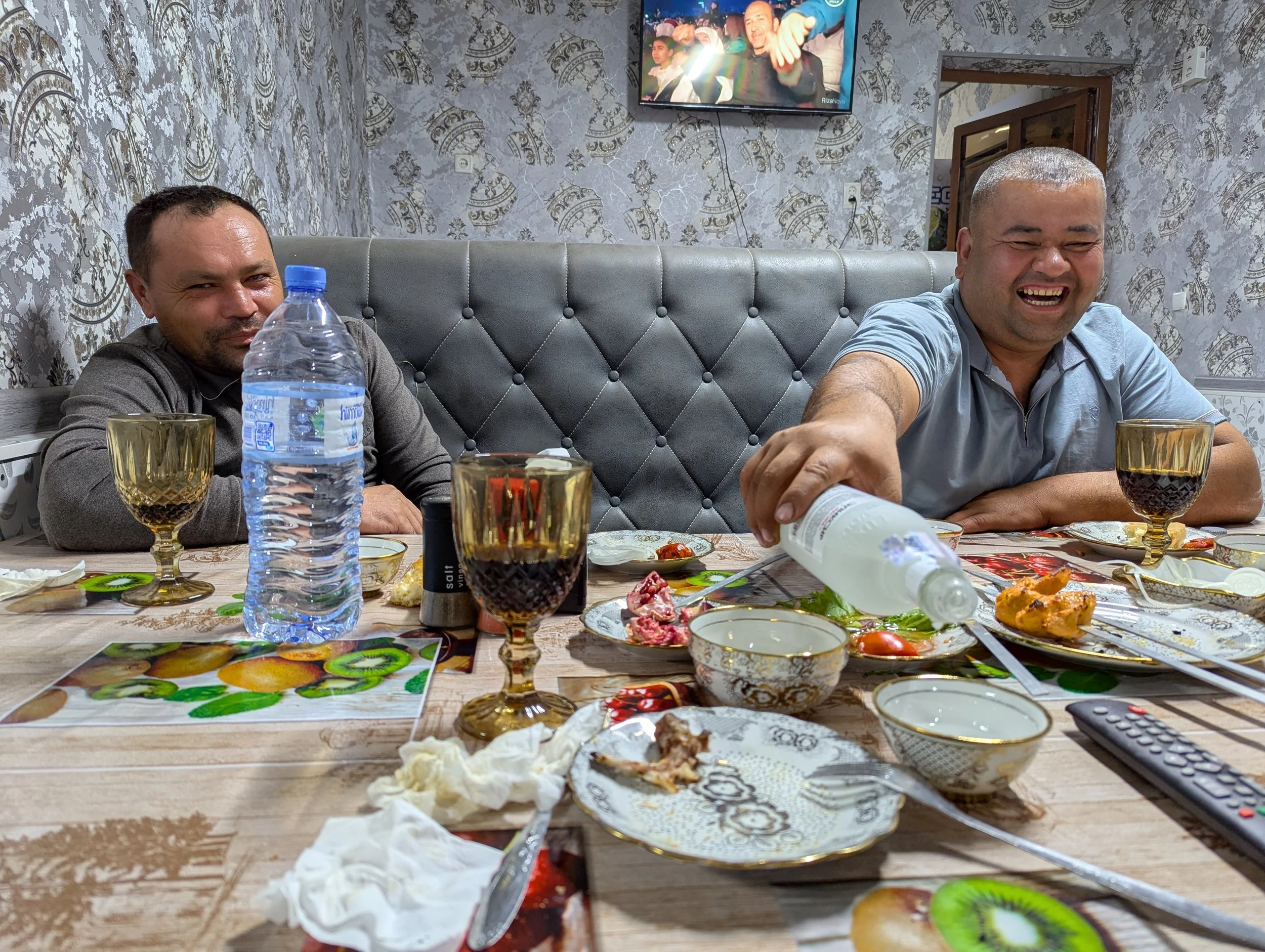
Dinner in Bukhara (accompanied by three bottles of vodka).
The Lowlights
There really is little to complain about when travelling in Uzbekistan (unless you’re a vegetarian). While Tashkent is routinely ranked as having some of the world’s worst air quality, I barely noticed it in the few days I was there. If I’m really grasping for something negative then I’ll say that the quality of the toilet paper is substandard. So, if that’s an area of sensitivity for you, I suggest bringing a roll or two from home.
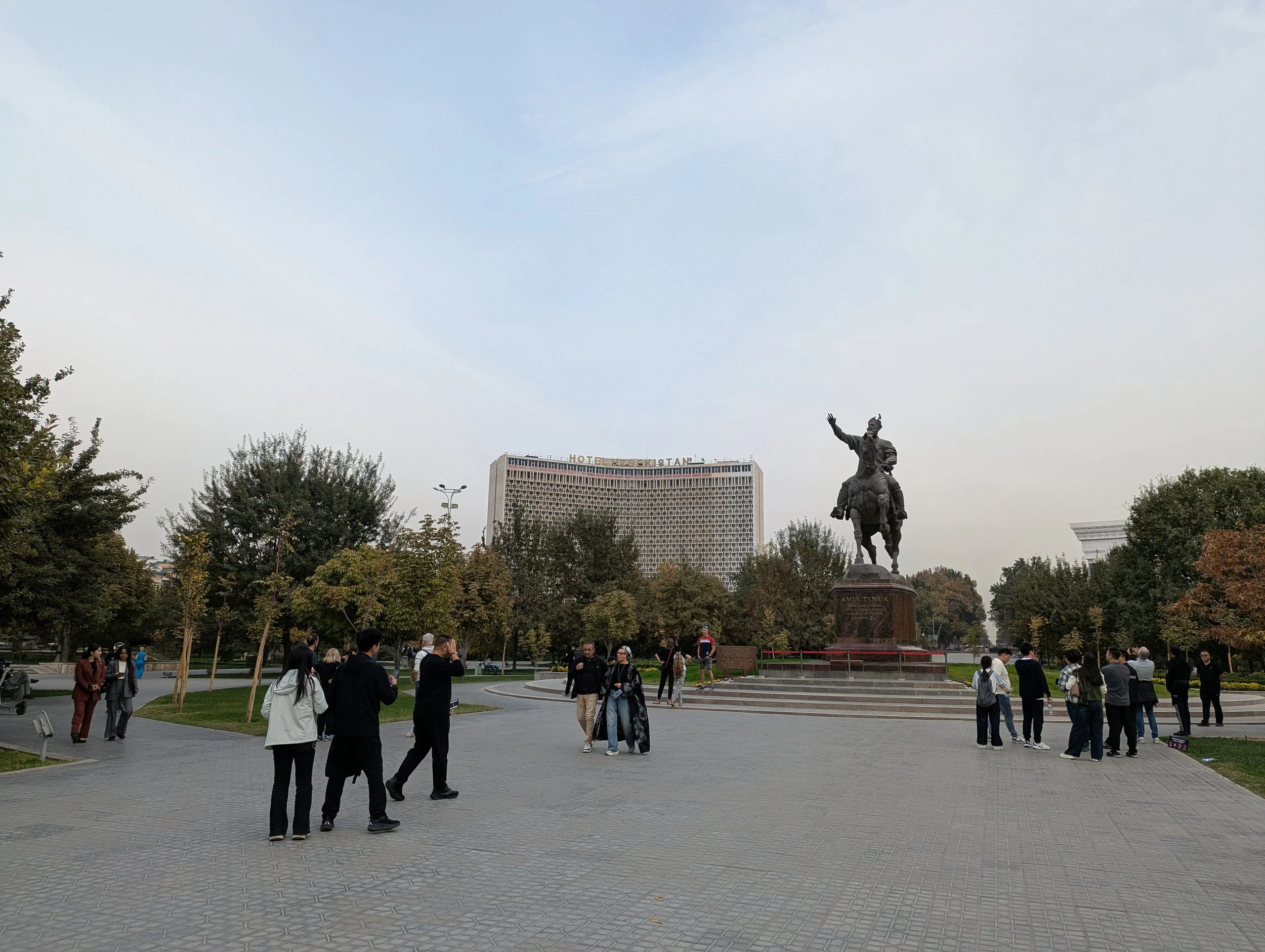
The famous Hotel Uzbekistan viewed from Amir Temur Square, Tashkent
Is Uzbekistan safe?
It is worth remembering that Uzbekistan is an authoritarian state and visitors should act accordingly. There is an ample police presence throughout the country, including Tashkent. However, the police are there to maintain public order, rather than being a reflection of crime levels, which are low. Locals in Tashkent take pride in how safe their city is, even if they have sacrificed their democratic rights to achieve it.
Aside from neighbouring Turkmenistan, Uzbekistan has the strictest laws against the LGBTQIA+ community in Central Asia, with prison sentences for some ‘crimes.’ As the country opens up it will be interesting to see if progress is made in this space, though for now travellers from this community should exercise caution.
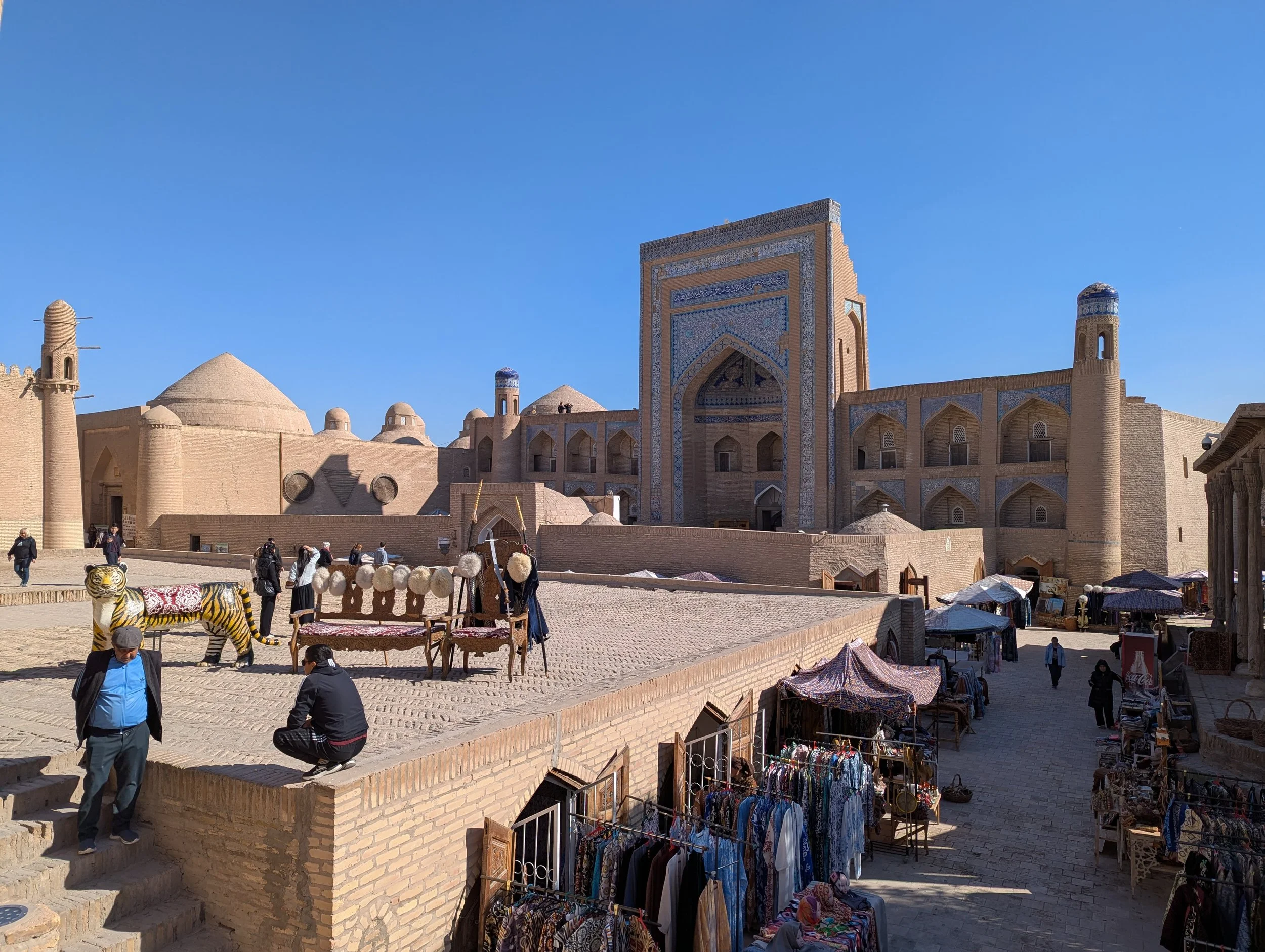
Inside the walls of Itchan Kala, Khiva
Top 5 Independent Travel Tips
Download the Yandex app: Yandex is the local equivalent of Uber and a great app to use when getting around Tashkent or anywhere in Uzbekistan. Tourists can pay in cash and it saves the hassle of dealing with taxis.
Buy a SIM card at the airport: Upon arrival in Tashkent, purchase a SIM card at one of the airport vendors. There is no public Wi-Fi in Uzbekistan. I bought a 50G UzTelecom and it was sufficient for the time I was there.
Purchasing metro tickets: At most Metro station tickets are purchased at machines. They do not give change and instead send a credit to your phone number. Therefore, it’s best to have exact change to avoid paying more than you need.
Book in advance: Train tickets can book out weeks in advance, especially in high season. While there are bus options, the trains are far more comfortable. On arrival in Tashkent, have your itinerary planned and book all your tickets at once. I missed out on a train back from Khiva and spent a long and mostly sleepless night on the bus.
How to eat cheap: In Tashkent especially, there are some decent street food options including somsa (samosa), bread, manti (dumplings), and local variations of sausage rolls and fried dough. Throughout Uzbekistan kebabs (lavash, doner, shawarma) are popular and always cheaper away from the main tourist hubs.
There is so much to enjoy about travelling independently in Uzbekistan, from the spectacular ancient sights, to the delicious flavours of Uzbek cuisine, and the unique Central Asian hospitality. The country is growing in popularity for good reason, so if Uzbekistan is not on your list already, it is time to add it!
If you enjoyed this article and would like to support travelonastustring, you can ‘buy me a coffee’ or donate directly via PayPal. Any donation, no matter how large or small, is appreciated and goes towards the running of my site.
To read more of my work visit the ‘publications’ tab, which includes a link to my book ‘Everything All of the Time,’ available on BookBaby or Amazon.