
The independent travel guide to Iraq
The reality of travel often shatters our perceptions, opening our eyes and minds to new discoveries and experiences. A trip to Iraq will not only shatter your perceptions, it will blow them away.
In Iraq you can explore historical sites older than the pyramids; gaze in wonder at glistening mosques and shrines; let your tastebuds be dazzled by mouth watering cuisine; and be welcomed by some of the most hospitable and generous people anywhere in the world. There are few countries in this world where perception and reality are so far apart.
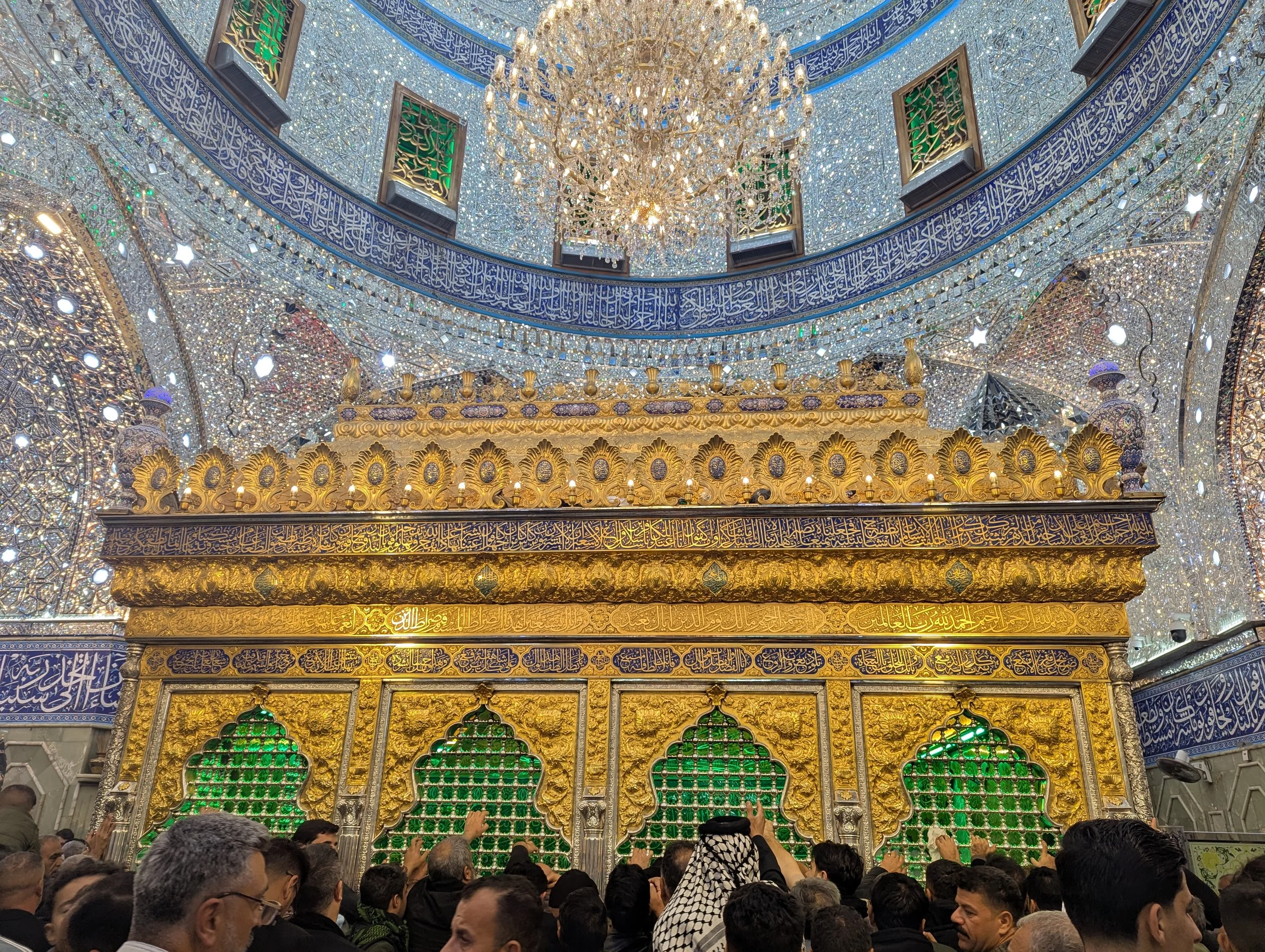
The stunning Imam Hossain Shrine in Karbala
The Highlights
The undisputed highlight of Iraq are its people. When I entered Iraq from Kuwait, I met Talal, who offered me a ride to Basra, paid for the taxi to my hotel, and then gave me his phone number in case I needed anything else. The next day he invited me to dinner with his extended family, and in every city I was welcomed with similar hospitality, and generosity. In three weeks of travel I slept only four nights in hotels, with the rest of the time spent couchsurfing. I was welcomed into the homes of rich and poor alike, and met other couchsurfers who took me to dinner and showed me the sites of their respective cities. Finally, when travelling between cities, using shared taxis and minivans, I was never quoted an inflated ‘tourist price,’ something that regularly happens in other parts of the world. The reality of Iraqi people is miles apart from the perception many people have of the country.
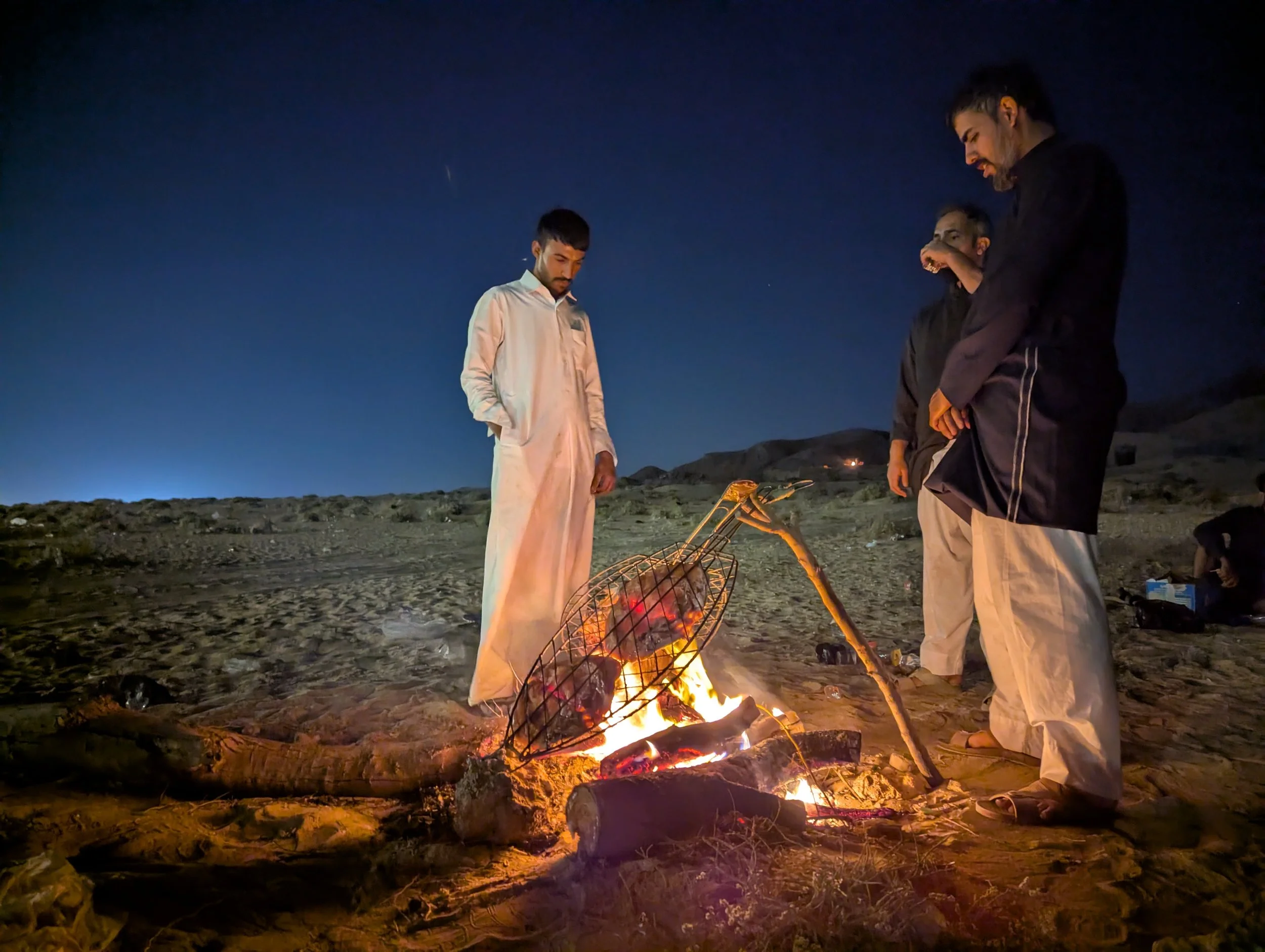
Cooking fish with Talal, outside Basra in southern Iraq
Recognised as the ‘cradle of civilisation,’ Iraq is home to some of the world’s most ancient sites including the Erbi Citadel, Ziggurat of Ur, and ancient city of Babylon. Iraqis are rightfully proud of their history, and are aware that the achievements of the ancient Sumerians are not fully recognised, overshadowed by ancient Egypt and Greece, despite pre-dating both of them. Unfortunately, more than a century of conflict, neglect, and looting has rendered many of Iraq’s archeological wonders a shadow of what they once were and could be.
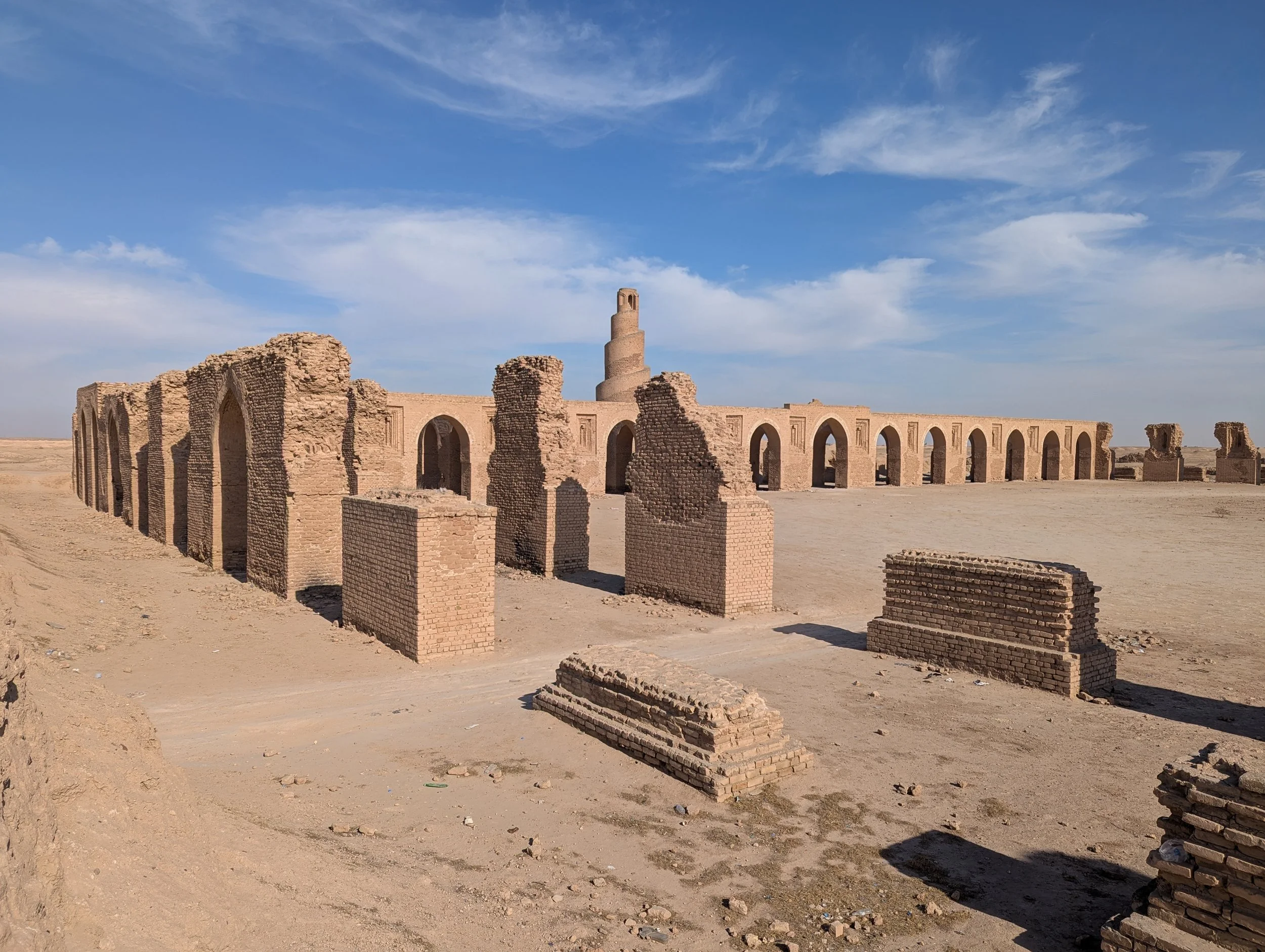
The ruins of Abu Dulaf
The food in Iraq is another highlight, and perhaps a surprise for some travellers (it was for me). While bread is served with every meal, at home and in restaurants, the cuisine is far more diverse than that. The options for street food include shawarma and falafel ‘sandwiches,’ costing between IQD 500 - IQD 3,000 and snacks such as sunflower seeds. Other cheap options include kebabs, lahmajoun (Iraqi pizza), quzi (rice with meat), and kubba (meat filled dumplings). Iraqis love a barbeque and grilled fish is a popular option, while pacha (slow-boiled sheep parts and intestines stuffed with rice) is another favourite - trust me, it tastes better than it sounds! Finally, no meal in Iraq would be complete without dessert and a cup of tea. The most popular dessert is kunafa and enormous trays of it are found in every bazaar, while sugar laden tea is plentiful and appropriate at any time of day or night.
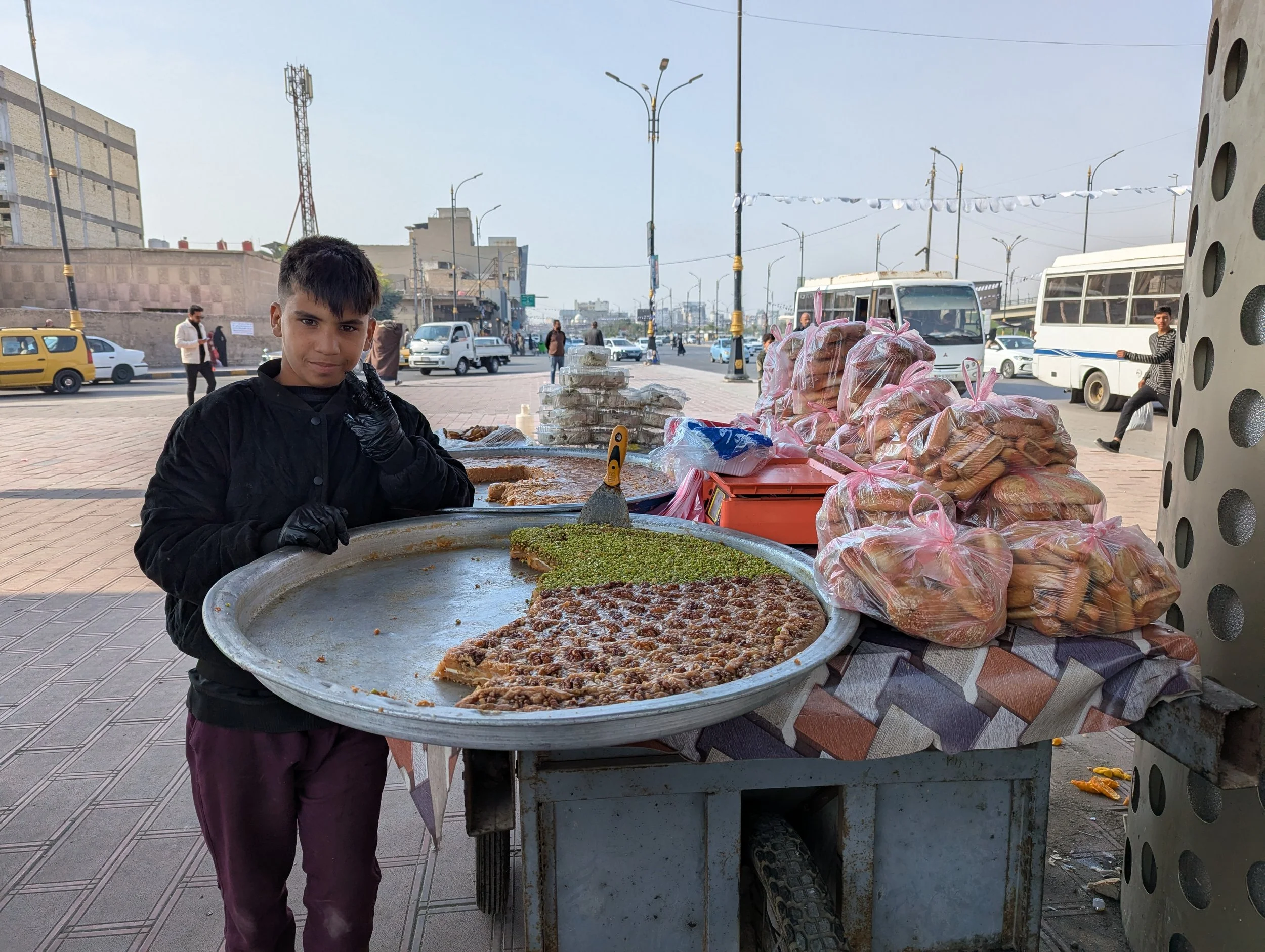
A boy selling sweets in Najaf
The Lowlights
For all the perceived dangers of travelling in Iraq, the most hazardous activity is the same as most places - driving. Iraqis have a love for speed, and road safety is not helped by drivers who are often using their mobile phone. Road markings are completely ignored in Iraq, and drivers routinely flash their headlights or use their horns to ‘encourage’ slower drivers to move out of their path; all with their foot still on the accelerator. Yet despite all the chaos of Iraq’s roads the system seems to work, and I saw few accidents or incidents of road rage.
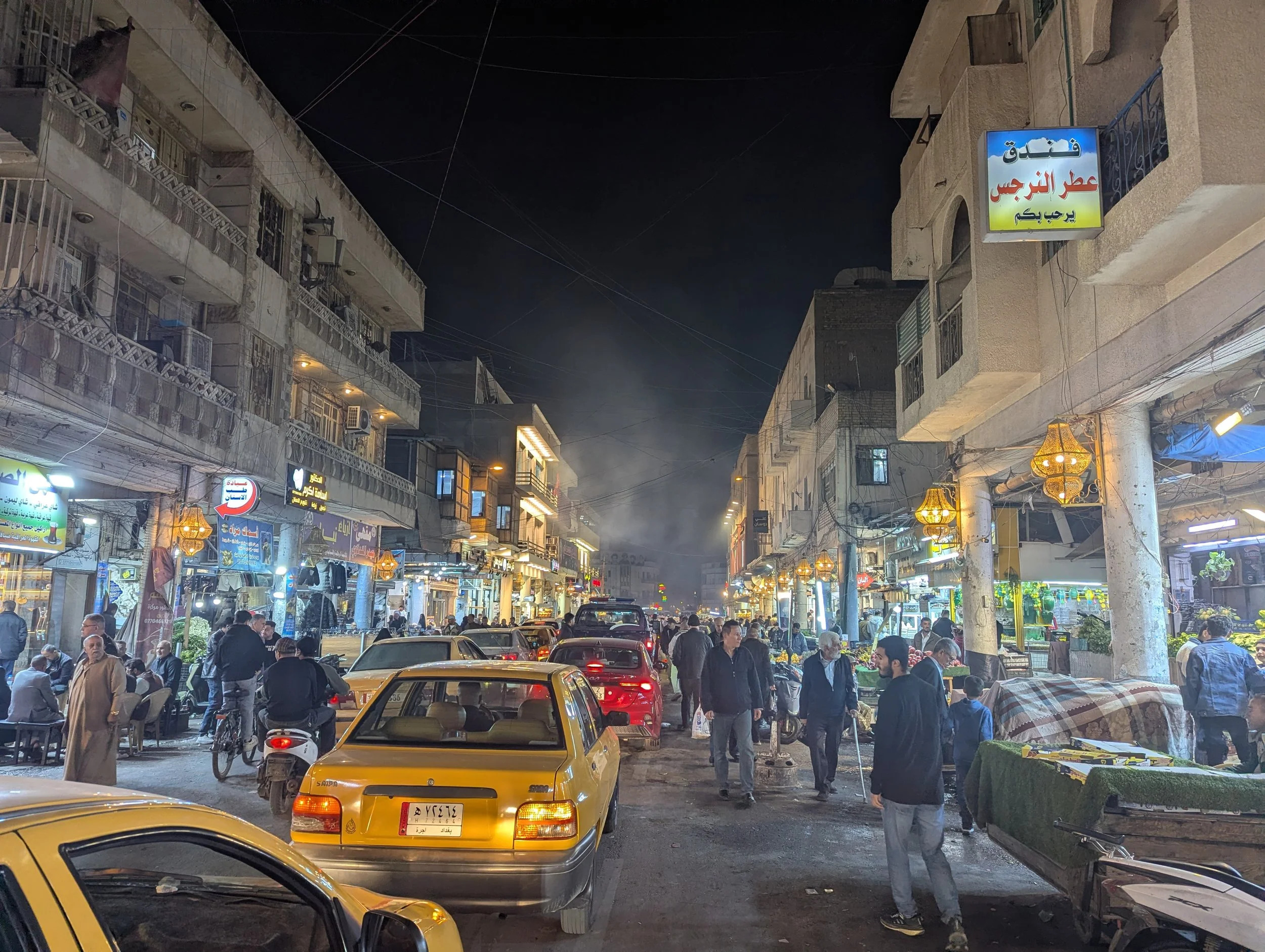
Evening traffic in Baghdad
As mentioned, the neglect and looting of Iraq’s archeological sites is disappointing to see. Outside of Babylon, cuneiform inscribed bricks can be found scattered in mounds of dirt, while the Abu Dulaf minaret is unprotected and is strewn with rubbish from visitors. There are some preservation efforts underway however after a generation of war it is understandable that the country has other priorities.
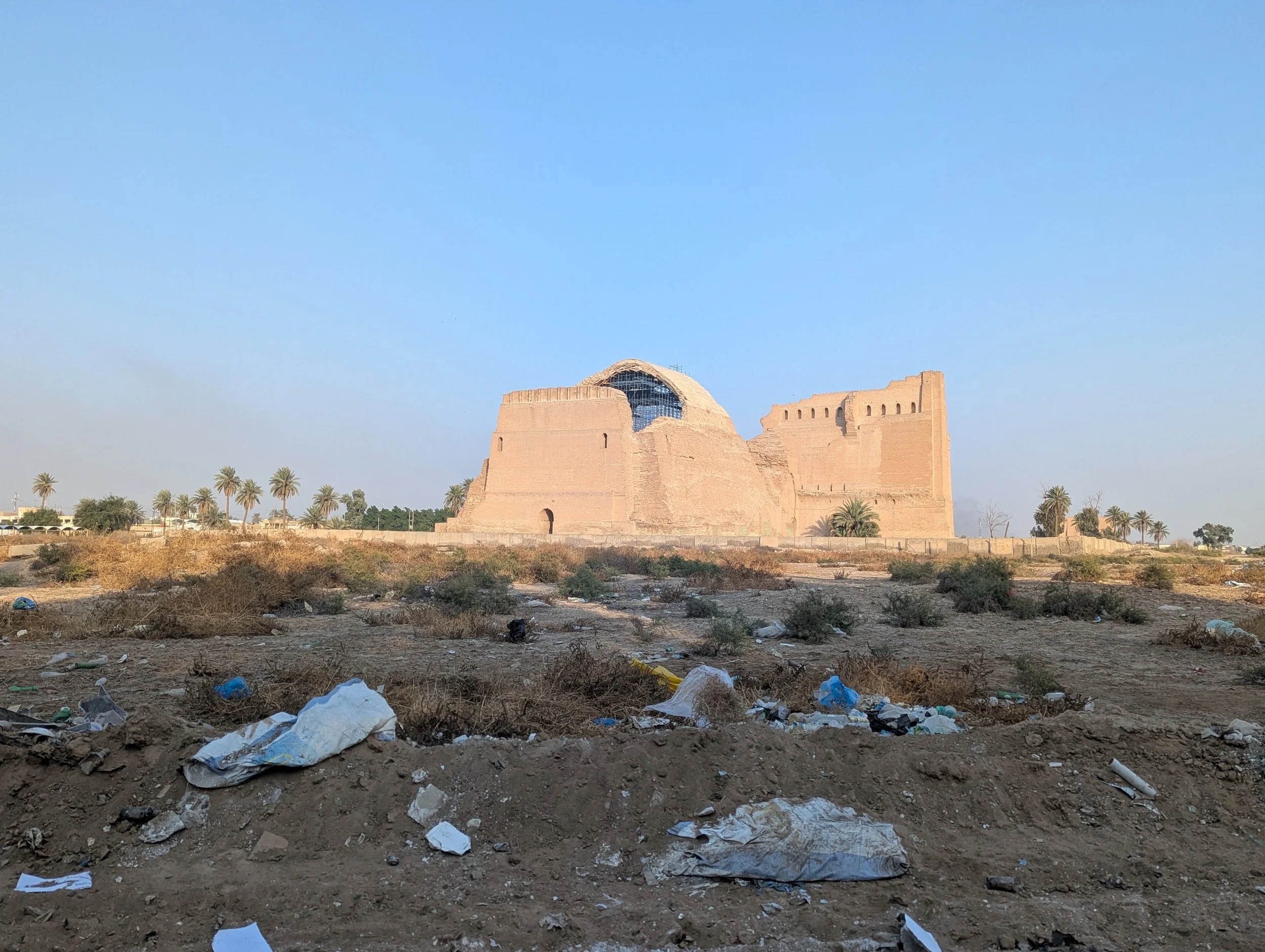
The Arch of Ctesiphon
Finally, smoking. Coming from Australia, where smokers have been appropriately banished to the fringes of society, it was difficult to cope with the high levels of smoking in Iraq. People light up when eating breakfast, cafes are filled with smoke hazes, and parents often smoke around their children. Even offices and schools are not off limits, with staff rooms full of chain-smoking staff and teachers.
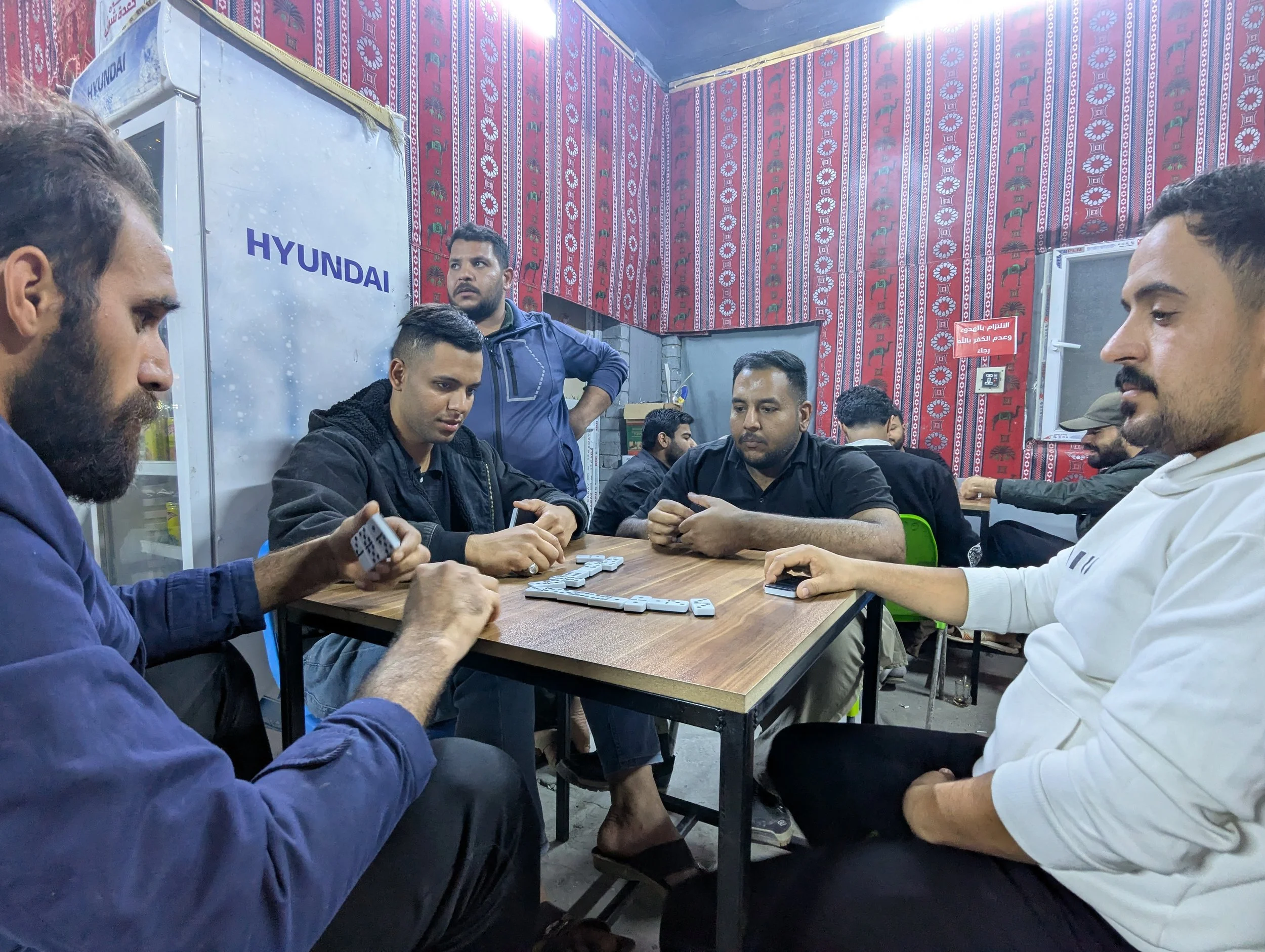
Dominoes and passive smoking in Karbala
How safe is Iraq?
I will preface this section by acknowledging that I am a middle aged white man, and was often mistaken for a local, or a visitor from Iran or Turkiye. However, in over 20 years of travel, I can confidently say that Iraq is one of the safest countries I have visited.
When visiting crowded markets in Basra, Najaf, Baghdad, and Mosul, I was never hassled or harassed, even when it was obvious I was a tourist. There was also no danger of pickpockets, as there is in heavily touristed European cities, and I was comfortable walking through crowds with my wallet in my back pocket. On multiple occasions I saw people drop money and others pick it up for them, or alert them to it. There is a strong social contract in Iraq, which is extended to visitors. Most social activity in Iraq takes place in the evening, and even then, long after the sun had set, I found no trouble walking around or taking a taxi at night, something I cannot say for some parts of my hometown of Melbourne.
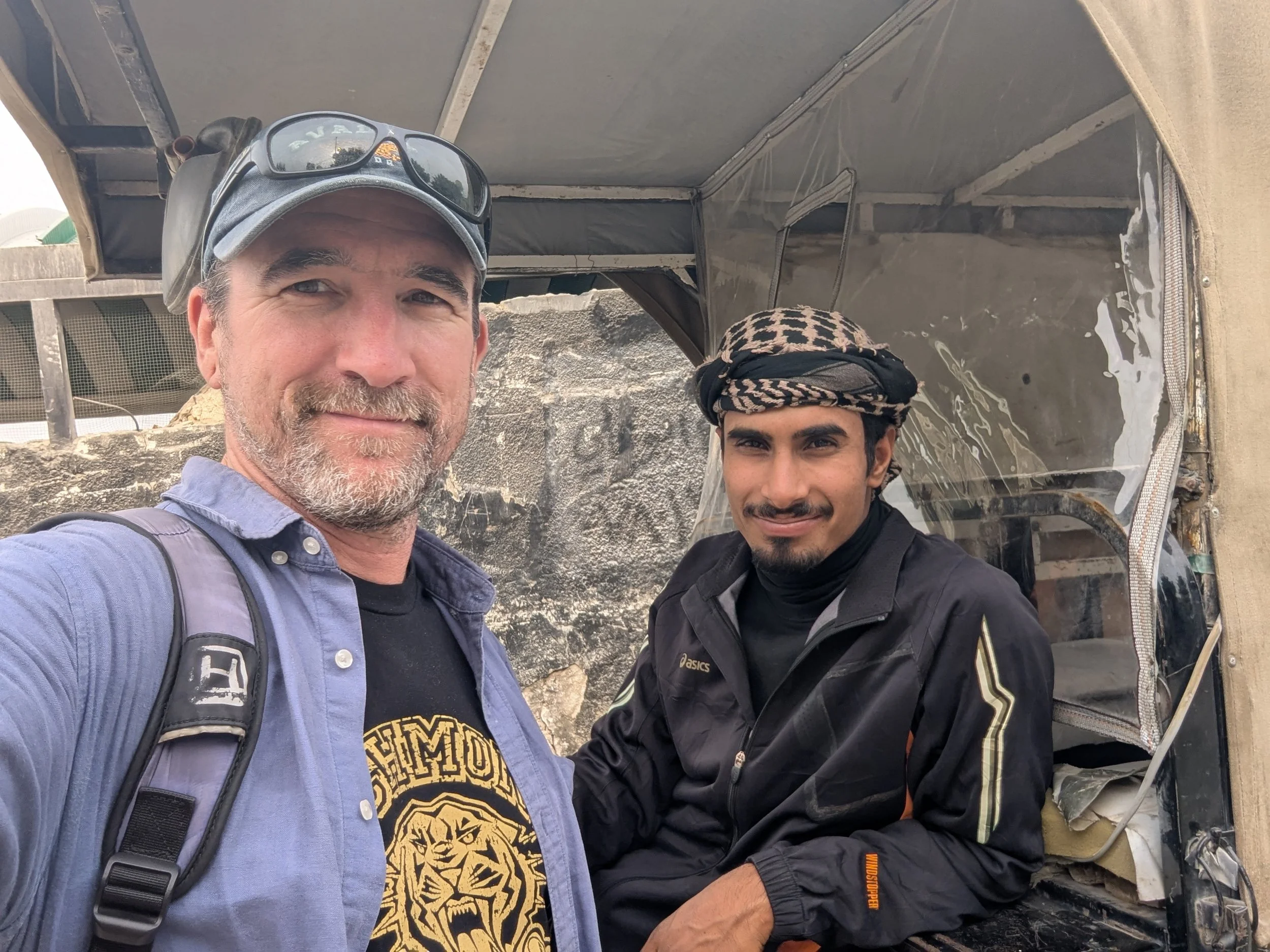
With Musa, a friendly tour guide who works in Wadi al Salam cemetery in Najaf
How do I get a visa for Iraq?
Ok, this is the complicated part. Iraq’s visa system is convoluted and even after visiting, I still cannot claim to fully understand it.
For foreign visitors, it is better to think of Iraq as two countries - Federal Iraq (from Basra in the south to Mosul in the north, including Baghdad) and Iraqi Kurdistan (Erbil and the northern regions, including a border with Turkiye). Depending on where you are entering an exiting, you may need a separate visa for each region. I would recommend joining the Iraqi Traveller’s Cafe group on Facebook for more specific questions.
To apply for a visa, visit the portal, https://evisa.iq and follow the steps. Visas are generally approved within a week and have a validity of 30 - 60 days depending on your country of origin.
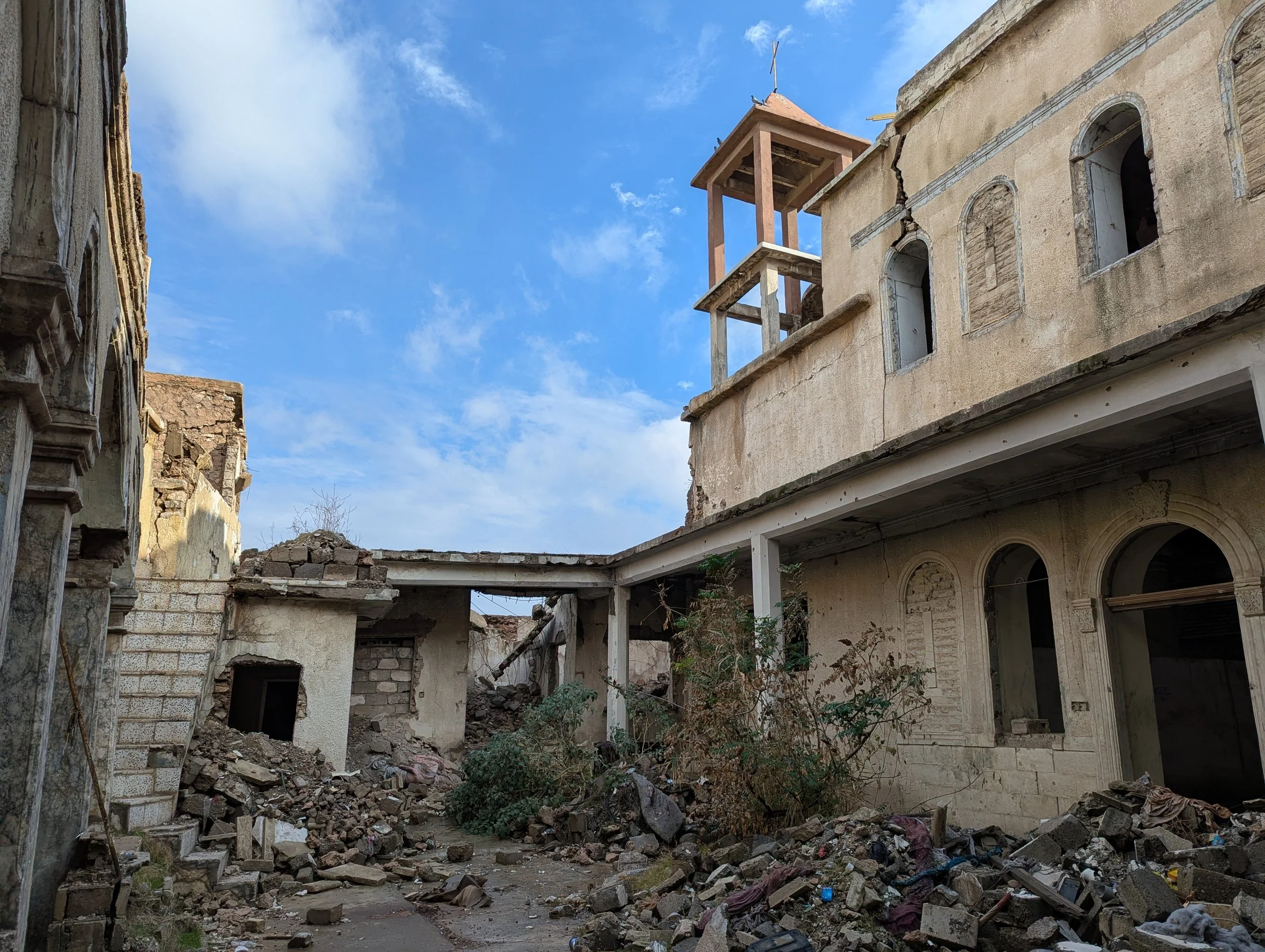
Remains of a destroyed church from the Battle of Mosul
Top 5 Independent Travel Tips
Download Baly and Careem: Baly (Federal Iraq) and Careem (Federal Iraq and Kurdistan) are the most popular rideshare apps in the country. Baly is a much cheaper option, and both accept cash. Travel between major cities is easy and affordable using shared public transport (shared taxis and minivans) all of which leave from depots known as ‘garages.’
Purchase a local SIM card: There are many options for local SIM cards. I chose Asiacell and had unlimited internet for a month for IQD 42,000. There is little to no public WiFi in Iraq.
Try Couchsurfing: This is the best way to experience Iraqi hospitality and gain an insight into daily life. My couchsurfing experiences in Nasiriyah and Erbil were worlds apart, as were Karbala and Mosul, yet the consistent theme was being welcomed and treated as a member of the families I stayed with. Even if you’re not comfortable with staying at someone’s house, there are plenty of couchsurfers to meet up with and share a meal.
Samarra day trip from Karbala: Samarra (and nearby Abu Dulaf) are two of the best archeological sites in Iraq and you can visit from Karbala for just IQD 10,000 return! There is a tourist office near the Imam Hossain shrine where you can book tickets for the day trip. You can also get a free lunch at the Imam Al al-Hadi mosque.
Bring USD: While ATMs can be found throughout the country, it is best to travel with USD or another foreign currency. Money changers can be found in all major cities and will always offer a better exchange rate than banks. Outside of Iraq, dinars are worthless, so make sure you spend everything you have before you leave. I made the mistake of thinking I could change my leftover dinars at Baghdad airport, and despite there being three banks there, none of them exchange money.
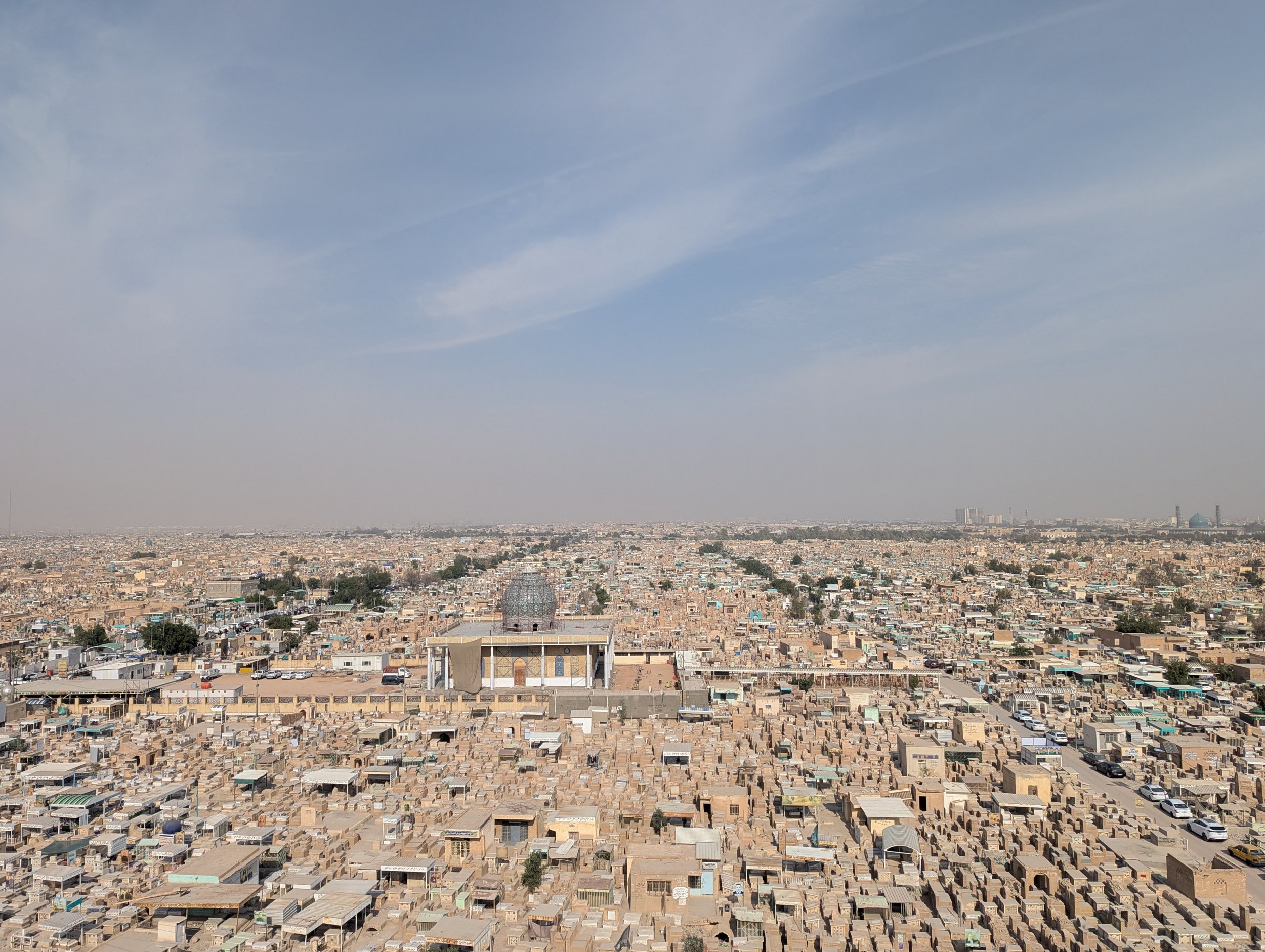
Aerial view of Wadi al Salam cemetery in Najaf
There is so much to enjoy about travelling independently in Iraq, from the ancient and holy sites, to the generosity of the Iraqi people, and the delicious cuisine. If you’re looking for somewhere that is really ‘off the beaten path’ and an escape from the tourist trail, then it’s time to head to Iraq.